Bio-oil Carbon Removal
📍United States of America

Charm Industrial has developed a
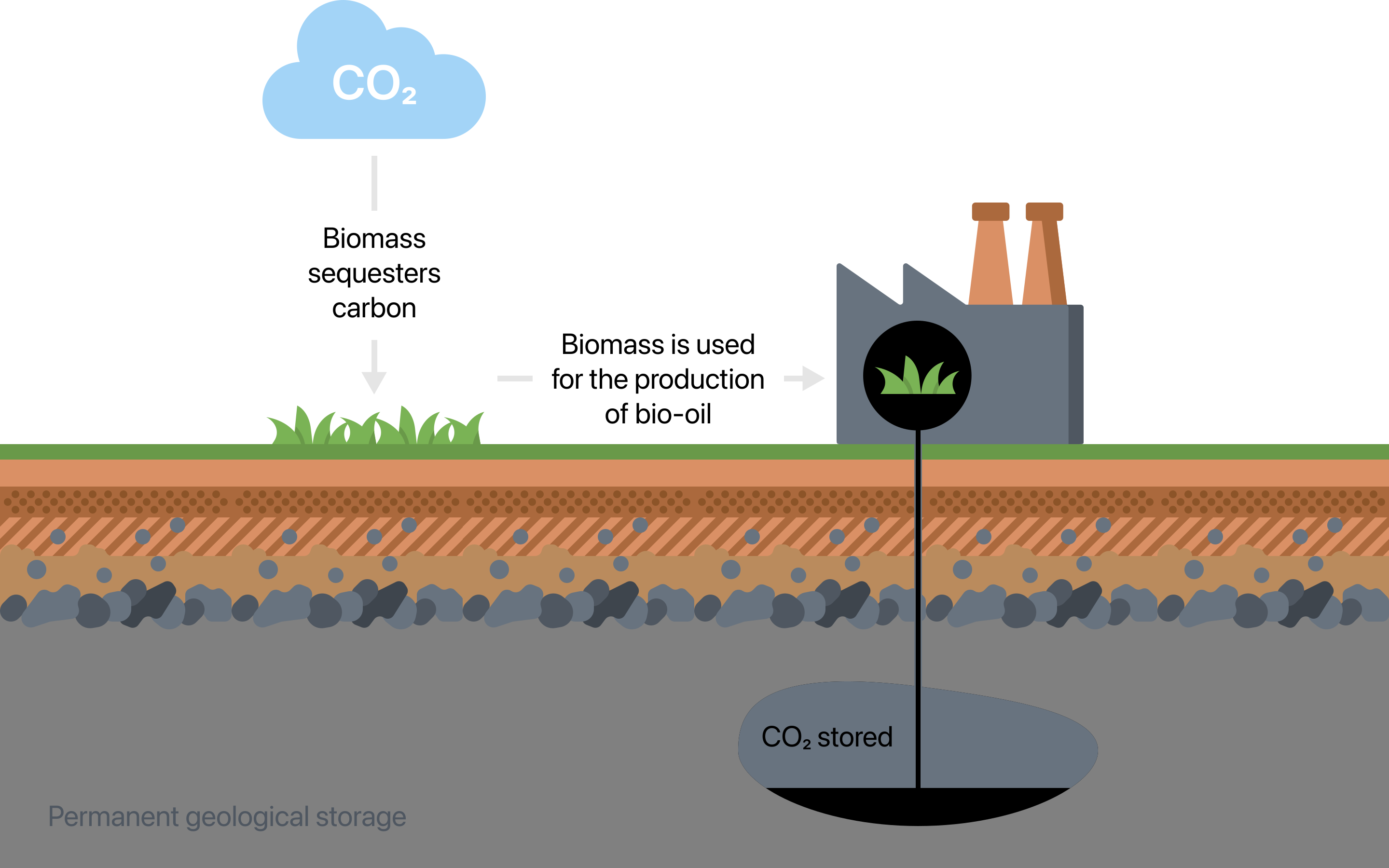
new, patent-pending method for negative emissions: convert biomass
to bio-oil, prepare the bio-oil for injection, and inject it deep
underground.
Bio-oil is produced through fast pyrolysis
of waste biomass, then transported to an injection well, prepared
for injection, and pumped underground. The process effectively
leverages plants' capacity to remove and store CO₂, and it then
takes advantage of empty salt caverns to keep it permanently right
where it once belonged: deep underground.

1.44 tons of CO₂ sequestered
per ton of bio-oil produced

Technological innovation
leadership

Rapidly scaling up
removal capacity

80-ton injection
completed as a first demonstration

40% lower costs
than Direct Air Capture (DAC)

Guaranteed supply scalability
+10 Gt of accesible waste biomass
Charm Industrial is working to return the atmosphere to 280 ppm CO₂. Their carbon removal activities are rigorously isolated, measured, and monitored, making the estimation of the amount of CO₂ removed less of an estimation and more of a certainty. Permanence is also almost guaranteed compared to other carbon removal projects—even DAC (Direct Air Capture)—because, unlike carbon dioxide in its gaseous state, bio-oil naturally sinks into the ground and solidifies in place.

Cellulosic biomass captures +10 Gt CO₂/year.

Charm collects this biomass and heats it to 500ºC in oxygen-free chambers, where it breaks down into bio-oil, a stable and pumpable fluid.

The resulting bio-oil is injected into the same deep underground rock formations that stored crude oil for hundreds of millions of years.
For every ton of bio-oil...
- Its production emits approximately 0.04 tons CO₂e;
- The transportation emits approximately 0.05 tons CO₂e;
- The injection emits approximately 0.004 tons CO₂e; and
- The sequestered carbon dioxide equivalent is approximately 1.53 tons CO₂e.
As a result, every ton of bio-oil sequestered produces a net -1.44 tons CO₂e across its lifecycle of production to sequestration.
Charm Industrial is a venture-backed hardware startup in San Francisco intelligently hacking natural processes to return the atmosphere to 280 ppm CO₂.
The project has been reviewed by CarbonPlan, a registered non-profit public benefit corporation in California.